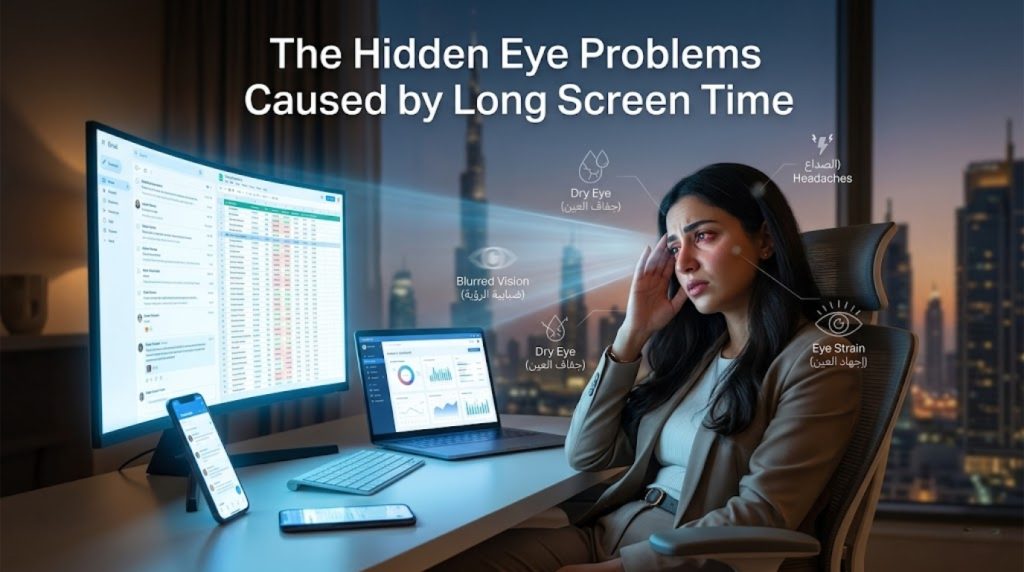
Digital screens have become a constant part of everyday life. From office work and online meetings to social media scrolling and late-night streaming, many people spend several hours a day looking at phones, tablets, laptops, and televisions. While technology improves convenience and productivity, excessive screen exposure can quietly affect eye health in ways many people do not immediately notice.
Long screen time is now strongly linked to digital eye strain, dry eyes, focusing difficulties, and other hidden vision problems that can gradually impact comfort and daily performance. This growing concern has led many individuals to seek guidance from the Best eye specialist in Dubai for preventive eye care and proper vision assessment.
How Screen Time Affects Your Eyes
Unlike reading printed material, digital screens force the eyes to work harder. Continuous focusing, glare, poor posture, and reduced blinking place extra stress on the eye muscles and tear film.
Many people ignore early symptoms because they often appear mild or temporary. However, repeated daily strain can gradually worsen visual discomfort over time.
Digital Eye Strain
Also known as computer vision syndrome, digital eye strain is one of the most common problems caused by prolonged device usage.
Common symptoms include:
- Tired or heavy eyes
- Burning sensation
- Difficulty focusing
- Temporary blurred vision
- Light sensitivity
- Headaches after screen use
Extended focusing on screens can overwork the eye muscles and make it harder for the eyes to shift focus between distances.
Dry Eye Syndrome
People naturally blink less while staring at digital screens. Reduced blinking causes tears to evaporate more quickly, leading to dryness and irritation.
Common symptoms of dry eyes include:
- Redness
- Grittiness
- Watering eyes
- Itching
- Eye discomfort after screen use
Air-conditioned environments and prolonged indoor work can further increase dryness and irritation.
Headaches and Neck Pain
Screen-related eye strain often affects more than just the eyes. Poor posture, improper screen height, and continuous close-up focus may contribute to neck pain, shoulder discomfort, and frequent headaches.
Many individuals treat these symptoms separately without realizing that excessive screen exposure may be the underlying cause.
Difficulty Sleeping
Using digital devices late at night may affect sleep quality. Continuous screen exposure before bedtime can increase eye fatigue and make it harder for the eyes to relax properly.
Poor sleep may further worsen dryness, discomfort, and visual fatigue during the next day.
Increased Risk of Myopia in Children
Children are especially vulnerable to the effects of prolonged screen time. Increased near-focus activities combined with reduced outdoor play are contributing to rising cases of childhood myopia, also known as near sightedness.
Early eye examinations are important for identifying vision changes before they begin affecting learning and daily activities.
Tips to Reduce Screen-Related Eye Problems
Simple daily habits can help reduce the effects of excessive screen exposure.
Follow the 20-20-20 Rule
Every 20 minutes, look at something 20 feet away for at least 20 seconds. This helps relax the eye muscles.
Blink More Often
Conscious blinking helps maintain natural eye lubrication and prevents dryness.
Adjust Screen Position
Keep screens slightly below eye level and maintain a comfortable viewing distance.
Reduce Glare
Use proper lighting and avoid reflections on digital screens.
Limit Continuous Screen Usage
Taking short breaks throughout the day helps reduce eye fatigue.
Schedule Regular Eye Checkups
Routine eye examinations can help detect hidden vision problems early and ensure proper eye health management.
Conclusion
Long screen time can silently contribute to several hidden eye problems, including digital eye strain, dry eyes, headaches, focusing difficulties, and worsening visual comfort. Although symptoms may initially seem minor, ignoring them for long periods can affect productivity and overall quality of life. Healthy screen habits, regular breaks, and timely eye examinations play an important role in protecting long-term vision health in today’s digital world.