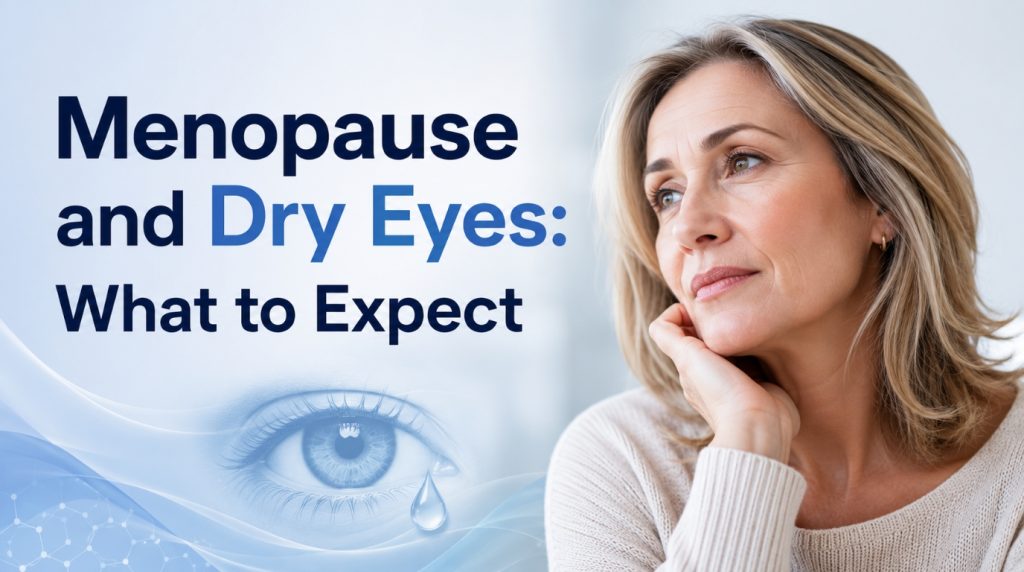
Menopause and Dry Eyes: What to Expect
Menopause brings significant hormonal changes that affect many parts of the body, including the eyes. One of the most common eye-related concerns during this stage of life is dry eye. While it may begin as occasional irritation, persistent dryness can affect comfort, vision, and daily activities if left unmanaged.
Understanding why dry eyes occur during menopause and learning simple strategies to manage symptoms can help maintain both comfort and eye health.
Why Does Menopause Cause Dry Eyes?
Estrogen and androgen hormones help regulate tear production and maintain the health of the eye’s surface. During menopause, declining hormone levels can reduce both the quantity and quality of tears.
As a result, the tear film becomes less stable, allowing tears to evaporate more quickly and leaving the eyes feeling dry and irritated.
Common Symptoms of Dry Eyes
Symptoms may vary from person to person but commonly include:
- Burning or stinging sensation
- Redness
- Grittiness or feeling like something is in the eye
- Excessive watering
- Blurred vision that improves after blinking
- Sensitivity to light
- Eye fatigue
Symptoms often become more noticeable after prolonged reading, computer use, or exposure to air conditioning.
Other Factors That Can Worsen Dry Eyes
Hormonal changes are only one part of the picture.
Additional factors include:
- Aging
- Certain medications
- Autoimmune conditions
- Long hours of screen use
- Dry or windy environments
- Wearing contact lenses
Addressing these contributing factors may help improve overall eye comfort.
Managing Dry Eyes During Menopause
Although dry eye is common, several lifestyle changes may help reduce symptoms.
Stay Hydrated
Drinking enough water supports overall hydration and contributes to healthy tear production.
Take Regular Screen Breaks
Blinking less frequently while using digital devices increases tear evaporation. Following the 20-20-20 rule can help reduce eye fatigue.
Use Lubricating Eye Drops
Artificial tears may help relieve mild to moderate dry eye symptoms. Choose products recommended by your eye care professional, especially if symptoms are persistent.
Improve Your Indoor Environment
Using a humidifier and avoiding direct airflow from fans or air conditioners may reduce tear evaporation.
Eat a Balanced Diet
Foods rich in omega-3 fatty acids, leafy greens, nuts, seeds, and colorful vegetables provide nutrients that support overall eye health.
When Should You See an Eye Care Professional?
Occasional dryness is common, but persistent symptoms deserve professional evaluation.
Schedule an eye examination if you experience:
- Ongoing discomfort despite self-care
- Persistent blurred vision
- Eye pain
- Significant redness
- Recurrent eye infections
- Difficulty wearing contact lenses
Early assessment can identify whether symptoms are caused by dry eye disease or another underlying condition.
Protecting Your Eyes During Menopause
Healthy daily habits can make a meaningful difference.
- Wear UV-protective sunglasses outdoors.
- Stay physically active.
- Avoid smoking.
- Get adequate sleep.
- Eat a nutrient-rich diet.
- Schedule regular comprehensive eye examinations.
Managing your overall health also supports healthy vision during and after menopause.
Frequently Asked Questions
Is dry eye common during menopause?
Yes. Hormonal changes during menopause are a common contributor to dry eye symptoms.
Will dry eyes improve after menopause?
Some women experience long-term symptoms, while others notice improvement over time. Treatment depends on the severity and underlying cause.
Can menopause cause blurry vision?
Dry eyes associated with menopause can temporarily affect vision, causing intermittent blurriness that often improves after blinking.
Can lifestyle changes help dry eyes?
Yes. Staying hydrated, limiting screen time, using artificial tears when appropriate, and maintaining a healthy diet may help improve comfort.